

Why offsite meetings are more productive
In many organisations, meetings feel like a box-ticking exercise. Packed agenda, little movement, and by the end of the day there’s mostly fatigue rather than progress. Anyone who regularly facilitates strategy away-days or multi-day business gatherings, such as at De Smockelaer in South Limburg, sees a different pattern emerge as soon as teams leave the familiar office environment. In a different setting, the conversation changes, the pace changes, and often the outcome does too. This article isn’t about meeting techniques, but about a simple question: what does a different place do to people—and to the quality of decisions.
Why meeting in the office often delivers little
Most meeting rooms in the office are designed for efficiency, not reflection. People walk straight out of one call into the next discussion—same room, same screen, same chairs. It feels familiar, but psychologically that kind of environment invites routine behaviour.
Routines aren’t bad in themselves; they provide structure. But when it comes to strategic choices or complex issues, that same routine becomes limiting. The brain recognises the context and, as it were, switches to autopilot. Colleagues slip back into familiar roles, the same people talk, the same arguments return. A strategy session in the office may be different in name, but in practice it feels like any other meeting.
A business gathering outside the city—for example at a meeting venue in South Limburg such as De Smockelaer—breaks that autopilot. Not because the chairs are different, but because the whole mix of environment, travel and rhythm is different. And that effect starts before the offsite meeting even begins.
The mental impact of physical distance
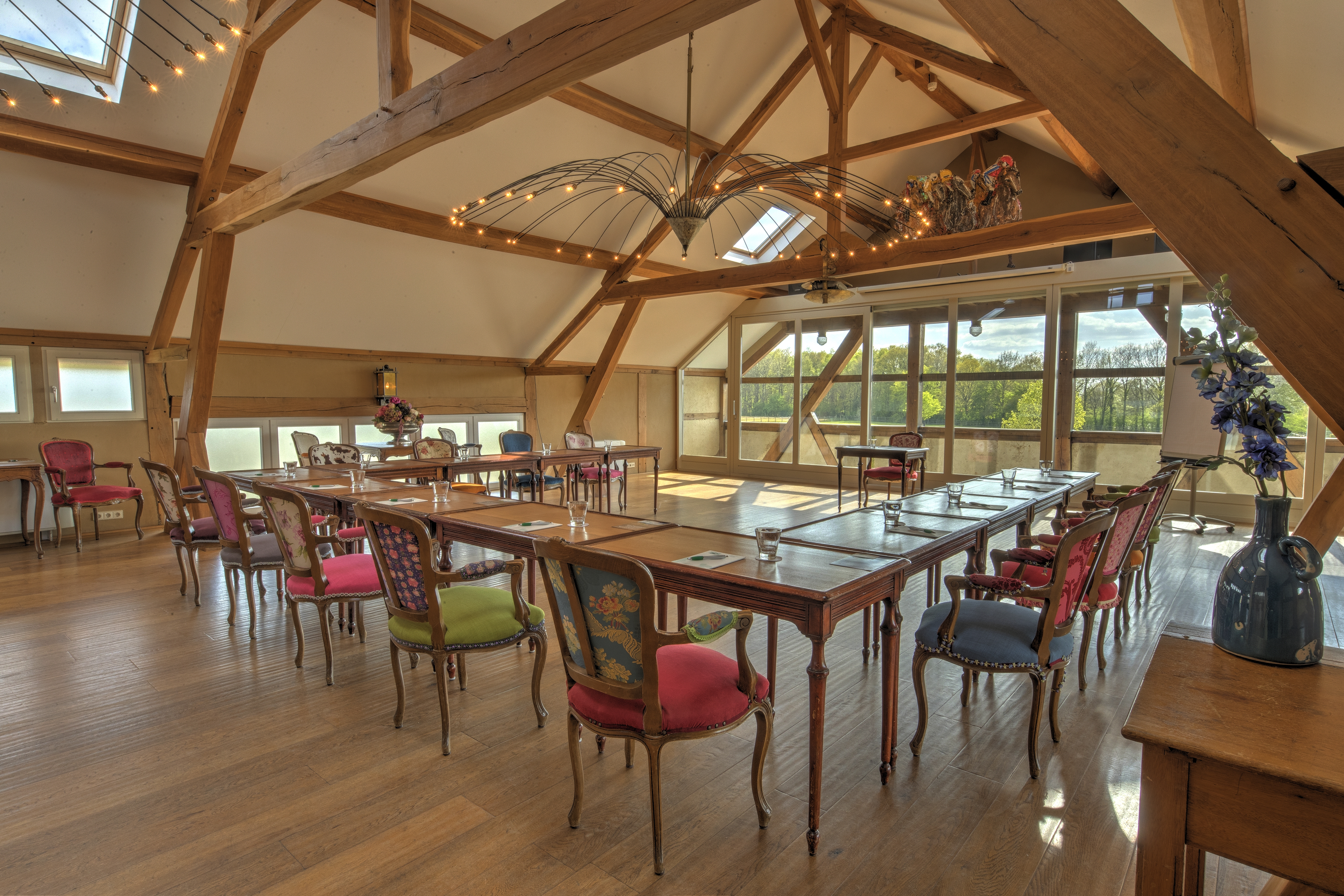
An offsite meeting first requires a change of location. People get in the car, sit on the train, drive into the hills. That transition time has more impact than is often realised. The brain gets the chance to detach from day-to-day busyness. Email and chat fade into the background for a while, and the image of your own desk disappears from view.
At locations like De Smockelaer, just beyond the Loorberg, you can see that happening quite literally. Teams arrive among the South Limburg hills and you see shoulders drop. Not because it suddenly becomes a holiday, but because the environment forces a different pace. Fewer stimuli, more space—literally a view instead of glass walls. In that setting it becomes easier to truly think, rather than only react.
Physical distance also creates mental distance from existing patterns. A strategy away-day in a familiar place often remains trapped in old dynamics and ongoing files. An offsite meeting makes it easier to ask: if we were starting again now, what would we choose. That step back is essential for strategy, culture and collaboration, and rarely happens spontaneously in a standard meeting room.
Fewer interruptions, less cognitive noise
Another important difference is the number of interruptions. In the office, every meeting is porous. There’s always someone who has to step out to take a call, people deal with emails in between, someone gets pulled back into an urgent discussion. That may seem inevitable, but it comes at a high mental cost.
Research on attention shows that each interruption demands costly switching time from the brain. People do return to the meeting, but they’ve lost a few steps in terms of content. In a multi-day business gathering at a secluded location, that noise is significantly reduced. Phones are more often put away, there’s no spontaneous interruption at the door, and the day’s agenda is clearer. That calm not only creates more focus, but also fewer defensive reactions. People feel less rushed and are therefore more willing to truly listen to each other.
How a new environment sharpens focus and creativity
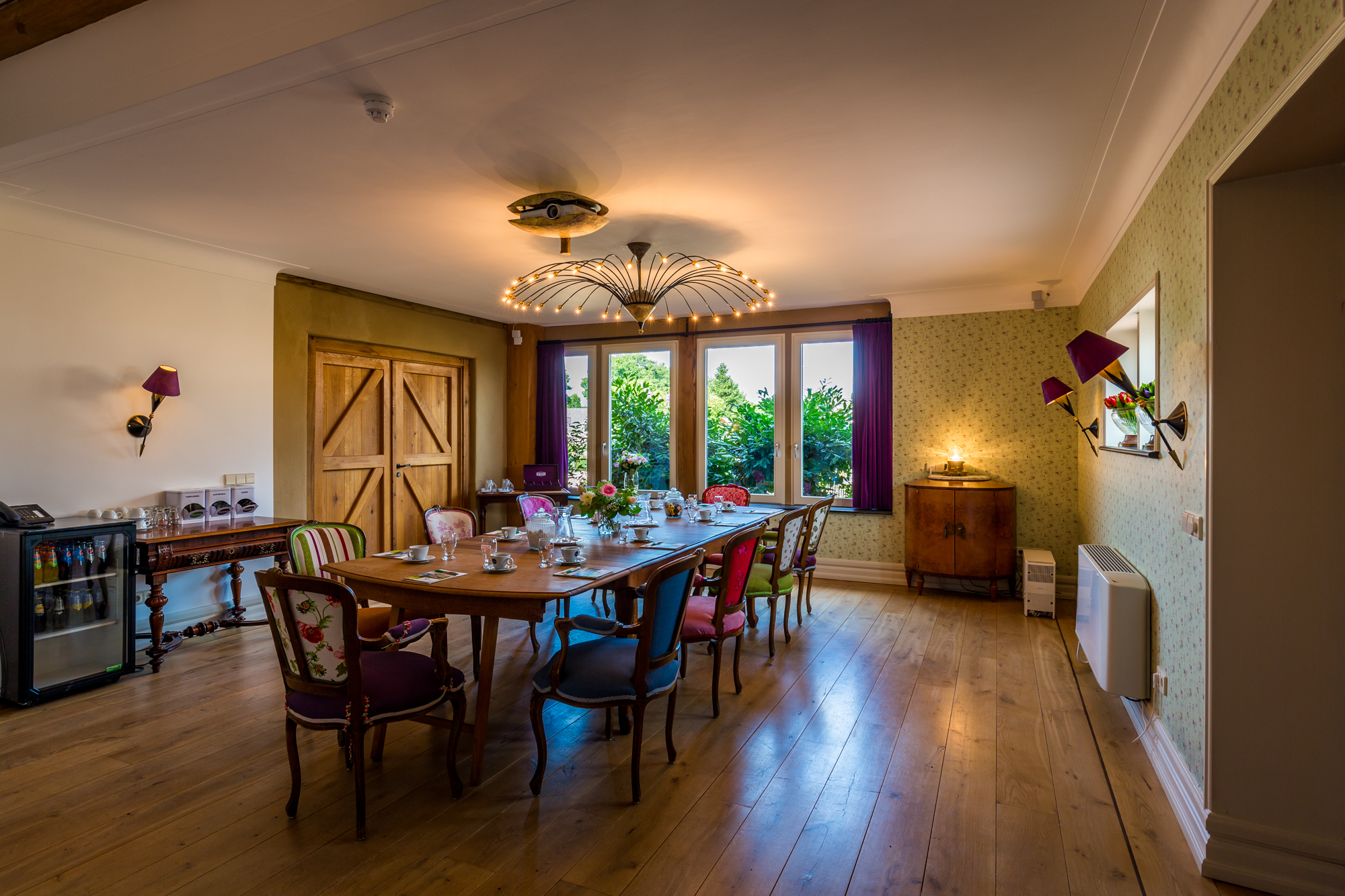
An offsite meeting in a new environment gives the brain different stimuli. Views of hills and orchards at a location like De Smockelaer work differently from staring at the same office wall. It sounds almost too simple, but this change of environment activates different networks in the brain.
New stimuli force observation. People look around, take short walks in between, notice details. That helps to loosen stuck thinking patterns. Not because everyone suddenly has brilliant insights, but because attention becomes fresh again. As a result, questions arise more often such as: why do we actually do it this way, could it be different. Those kinds of questions are the engine of real change.
Importantly, an offsite meeting doesn’t only make a difference in the plenary sessions. The informal moments in between are at least as valuable. Short conversations during a walk through the hilly landscape, an exchange over coffee or at the long table during a shared meal—this is often where the sharpest insights are formulated. The setting makes it easier to speak to someone one-to-one, outside hierarchy and fixed office routines.
The power of eating and staying overnight together
At locations with luxury group accommodation, such as De Smockelaer, the effect of eating and staying overnight together is even stronger. A working day doesn’t end as soon as everyone gets in the car; the conversation simply moves to a different context. At the table it continues for a while around an idea; later in the evening, small groups reflect on a tension that came up in the meeting.
Staying overnight takes the pressure off. Not everything has to be decided today; thoughts are allowed to mature overnight. Often the real clarity only comes the next morning, when people look around with fresh eyes and notice that a point that seemed complicated yesterday is suddenly easier to place. In a multi-day business gathering, this creates a different depth in the conversations. The pace slows, but the essence becomes sharper.
That effect is hard to replicate in a half-day at the office. It’s precisely the interplay of working, walking, eating and sleeping in the same place that changes how people speak with each other. Less formal, yet more serious. That is exactly where an offsite meeting proves its added value.
When offsite meetings do and don’t work
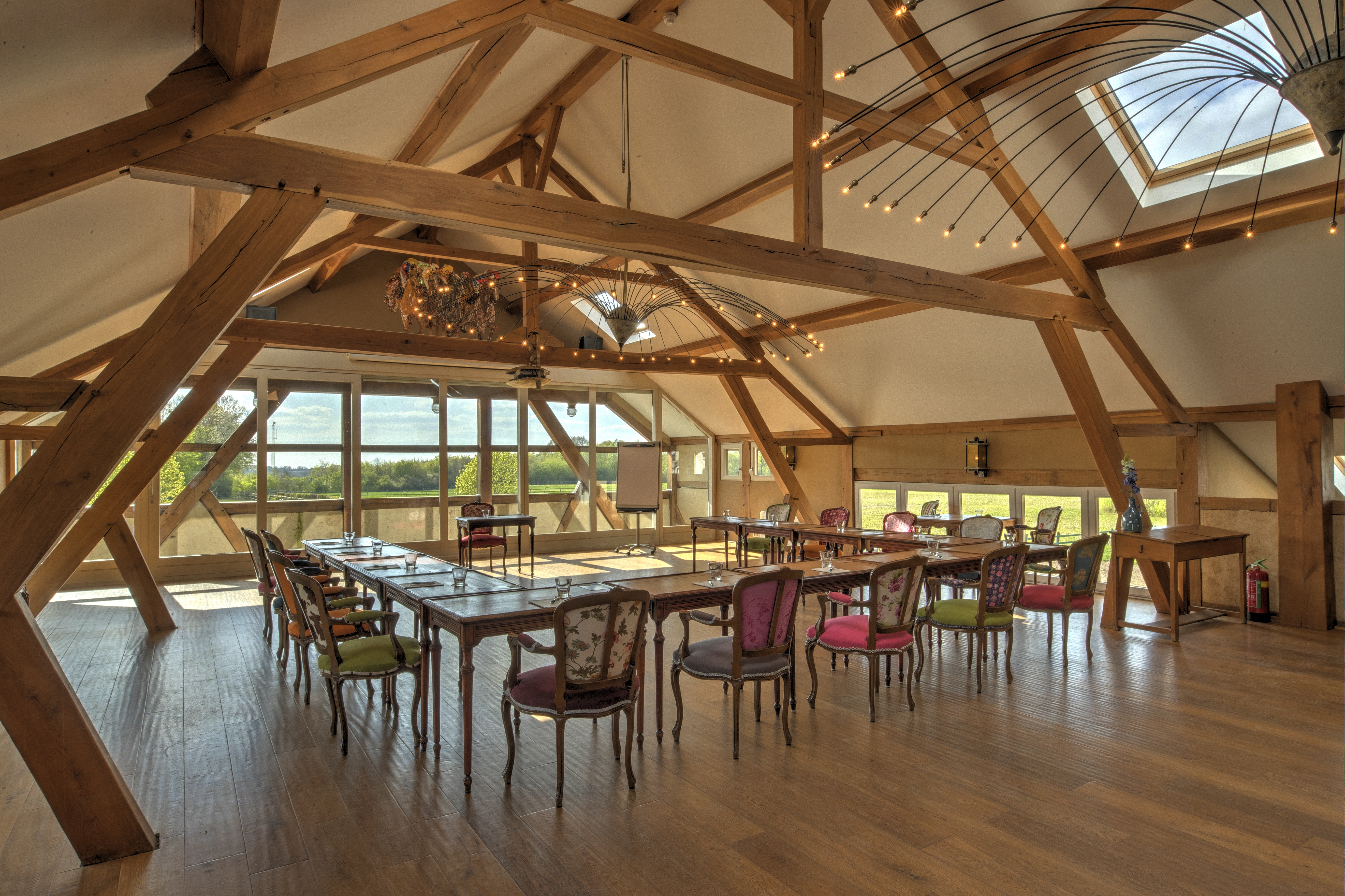
Offsite meetings are not a miracle cure. They work particularly well when issues call for reflection, setting direction, or repairing collaboration. Think of a strategy away-day with the management team, a programme where strategy and culture come together, or a team day where tensions need to be aired. In such situations, an environment like De Smockelaer—outside the city and surrounded by greenery—helps you to literally take a step back.
In programmes involving multiple disciplines, a business gathering outside the city also offers advantages. People are away from their department; the badge of their own team carries less weight. That makes it easier to think from the perspective of the organisation or the customer, rather than from one’s own silo.
There are also situations in which an offsite meeting is less suitable. For quick operational alignment, weekly progress meetings or strictly technical decisions, the investment in time and organisation often doesn’t outweigh the return. In those cases, a short, well-prepared session in the office usually works fine. The same applies if the question is still too vague. If you don’t really know what needs to happen, an offsite can become an escape route—yet you risk returning with the same feeling.
The key is that context and purpose must match. A location like De Smockelaer offers space, calm and time, but they only truly come into their own if the gathering also calls for quiet and concentration. Put differently: if you only want to get through a long to-do list, you don’t need to drive to South Limburg for that. But if you want to take a next step together in vision, collaboration or direction, you really do benefit from the power of an offsite meeting.
Change the context to change the outcomes
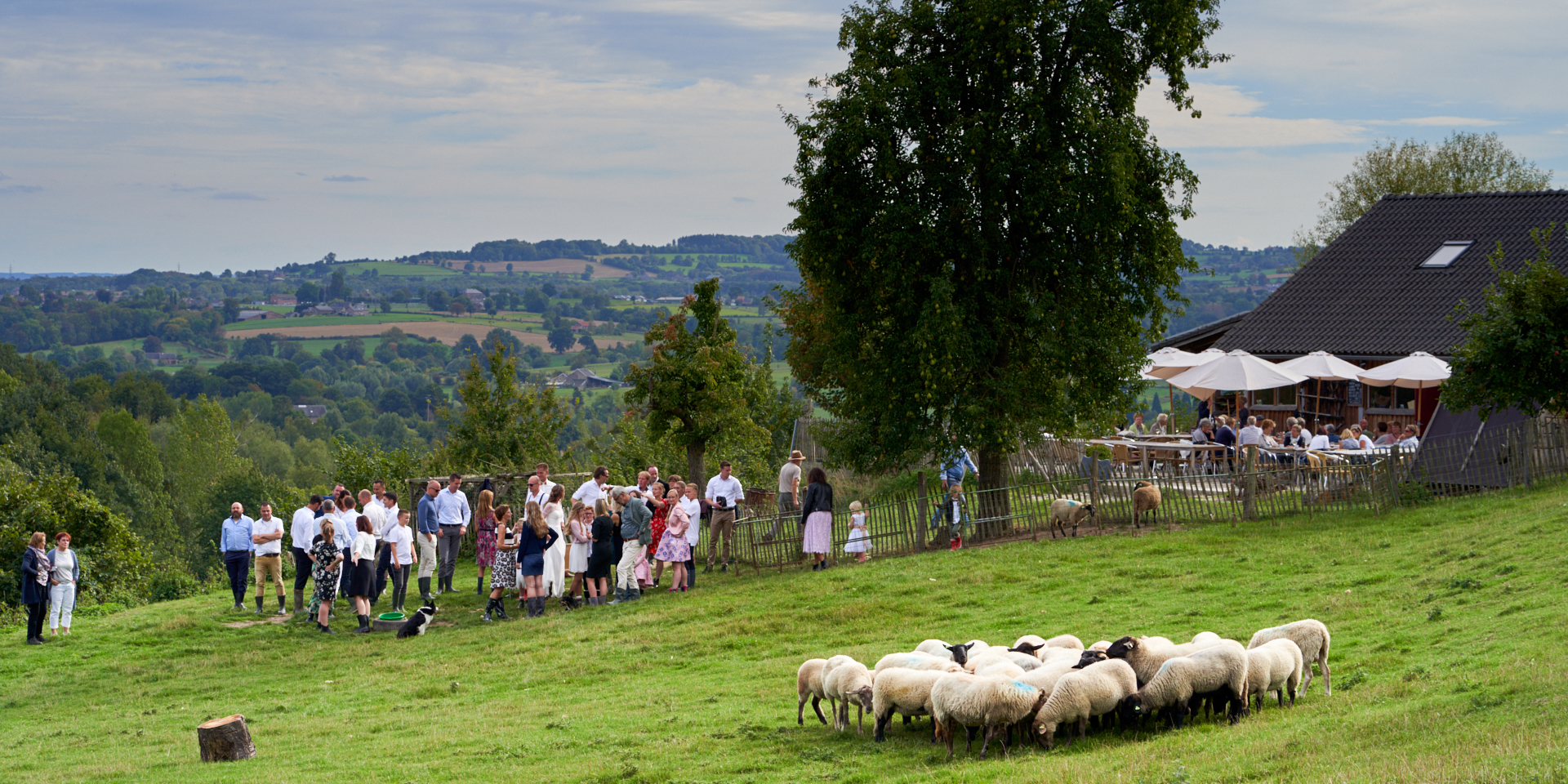
Those who facilitate or take part in offsite meetings more often will recognise a recurring pattern. It isn’t the flip charts, formats or presentations that make the big difference, but the context in which people meet. An environment like De Smockelaer in South Limburg, with space to work and to stay, helps people step out of autopilot and engage in conversation with more attention. That’s ultimately what it’s about: creating a setting in which important conversations can truly land and decisions can be made with conviction.
Why are offsite meetings often more productive than ordinary office meetings
Offsite meetings literally take people out of their usual pattern. The travel, the different environment and the different daily rhythm together create more attention and less distraction. In the office, interruptions, ad hoc requests and digital noise constantly creep into the meeting, fragmenting concentration. In a calm meeting venue in South Limburg, such as De Smockelaer, the setting is far more geared towards uninterrupted time. That creates space for longer trains of thought, sharper questions and better-founded decisions.
What role does the environment of a location like De Smockelaer play in how an offsite meeting unfolds
The physical environment subtly shapes behaviour. Views of hills, walking opportunities around the venue and the feeling of distance from the city invite people to slow down and reflect. Short walks during breaks act as a reset for the mind, so participants return with more focus. Natural environments also often soften the tone of the conversation; people respond less defensively and listen better. That makes it easier to bring sensitive topics into the open.
Is a multi-day business gathering always better than a single-day offsite
Not necessarily—the choice depends on the objective. A single day is often enough to explore a clearly defined issue together and make decisions. A multi-day business gathering mainly adds value for complex programmes, for example a combination of strategy, culture and team dynamics. By staying overnight together, as is possible in the group accommodation at De Smockelaer, conversations gain more depth. The informal evenings and fresh mornings add an extra layer to the formal sessions, but that only makes sense if the issue actually calls for that depth.
When is an offsite meeting not a good idea
An offsite meeting is less suitable for purely operational alignment or short-cycle progress tracking. In those cases, the added value of a different environment is limited and travel time and organisation don’t outweigh the benefits. The same applies if the purpose of the gathering is still unclear. If you haven’t clearly defined what’s needed, you risk organising a strategy away-day that feels good but achieves little. Clarify the question first, then choose the context—that’s usually wiser.
What makes informal moments and shared meals so important during an offsite
Informal moments are often the backdrop where real insights emerge. At the table or during a walk, people dare to go a step further than in the formal setting. The pressure is lower, the tone is looser, and precisely because of that, tensions, doubts or ideas are more likely to come to the surface. At a location like De Smockelaer, where teams can eat and stay together, you see the lines shorten. Colleagues seek each other out more easily outside their usual circles, strengthening trust and understanding—which then feeds back into the official sessions.
How do you prevent an offsite meeting from feeling like an outing rather than serious work
The key is clear expectations and a well-thought-out agenda. An offsite meeting may feel pleasant, but it needs a sharply defined goal and a programme that logically follows from it. In an environment with many possibilities, such as De Smockelaer, it helps to deliberately alternate blocks of concentrated work with space for reflection and relaxation. That keeps the work at the centre, while the environment supports rather than distracts. The combination of clarity in content and calm in context means participants experience the gathering as serious and, at the same time, enjoyable.
What is the most important thing to consider when choosing an offsite location
More important than luxury or technology is whether the environment facilitates the desired behaviour. Do people truly have peace and quiet, is there enough space to work in smaller groups, are there opportunities to go outside in between. A meeting venue in South Limburg such as De Smockelaer, for example, offers both private spaces and direct access to nature. That makes it easier to adapt the rhythm of the day to the content. Ultimately, it’s the alignment between place, programme and purpose that determines whether an offsite meeting truly becomes productive.